
Burgonet
ca. 1550–55
Medium
Steel
Dimensions
H. 11 1/4 in. (28.6 cm); W. 8 3/4 in. (22.3 cm); D. 15 in. (38.1 cm); Wt. 4 lb. 11 oz. (2126 g)
Classification
Helmets
Culture
German, Augsburg
Department
Arms and Armor
Museum
Metropolitan Museum of Art, New York, NY
Credit
Gift of William H. Riggs, 1913
Accession Number
25.135.66
Rights
Public Domain
Tags
Art Historical Context
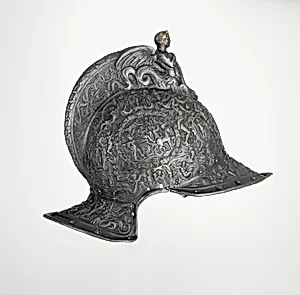
Step into the riveting world of 16th-century German armor with this exquisite Burgonet, crafted around 1550–55 by the master armorer Desideriusmschmid and engraver Jörg Sigman Augsburg. Measuring just 11¼ inches high and weighing a sturdy 4 pounds 11, this steel helmet exemplifies the pinnacle of Renaissance metalworking. Worn by elite cavalry or infantry, the Burgonet's open-faced design with a pronounced peak and cheek guards offered vital protection while allowing clear vision and breathability on the battlefield. What sets this piece apart is its artistic flair: intricate engravings depicting dynamic scenes of men, horses, battles, and chariots, transforming a tool of war into a canvas of storytelling. Augsburg, a thriving hub of armor production during the Holy Roman Empire, was renowned for such fusion of function and fine artistry. Helmschmid's workshop produced pieces for nobility, blending robust steel forging with Sigman's detailed etchings to evoke the chaos and heroism of ancient or contemporary conflicts. Today, gifted to the Metropolitan Museum of Art in 1913 by William H. Riggs, this Burgonet invites us to ponder the armored knight's dual role as warrior and patron of the arts—a testament to German craftsmanship at its most elegant and enduring.