
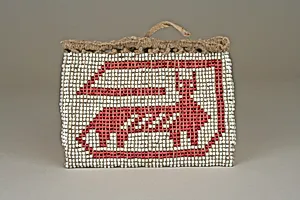
Business Bundle Bag
Unknown Artist
1790–1890
Medium
Native-tanned skin, glass, wool
Dimensions
H. 3 3/4 x W. 5 in. (9.5 x 12.7 cm)
Classification
Beads-Sculpture|Hide-Costumes
Culture
Mesquakie or Potawatomi
Department
Arts of Africa, Oceania, and the Americas
Museum
Metropolitan Museum of Art, New York, NY
Credit
Ralph T. Coe Collection, Gift of Ralph T. Coe Foundation for the Arts, 2011
Accession Number
2011.154.62
Rights
Public Domain
Tags
Art Historical Context
This exquisite *Business Bundle Bag*, crafted by an unknown artist of Mesquakie (Fox) or Potawat culture between 1790 and 1890, exemplifies the artistry of Great Lakes Native American communities. Measuring just 3¾ x 5 inches, the small pouch is fashioned from native-tanned hide meticulously decorated with vibrant glass trade beads and wool elements. The classification as beads-sculpture and hide-costume hints at its dual role as both a functional container and a wearable adornment, possibly part of regalia or a personal medicine bundle. Beadwork like this flourished in the 19th century as European trade introduced colorful glass beads, which artisans adapted into intricate designs—here likely featuring animal motifs, as suggested by the tags. These patterns held deep cultural significance, symbolizing spiritual power, clan identities, or connections to the natural world. For Mesquakie and Potawatomi peoples, enduring displacement and treaty pressures during this era, such objects preserved traditions amid change, blending utility with profound symbolism. Now in the Metropolitan Museum of Art's Ralph T. Coe Collection (gift of 2011), this bag invites visitors to appreciate the skill and resilience embedded in everyday sacred items, a testament to Indigenous ingenuity.