
Bustan (Orchard) of Sa'di
dated A.H. 936/ 1529 CE with later additions
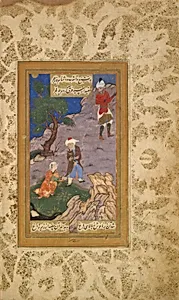
Medium
Ink, opaque watercolor, and gold on paper; leather
Dimensions
H. 10 7/8 in. (27.6 cm) W. 6 5/8 in (16.8 cm)
Classification
Codices
Department
Islamic Art
Museum
Metropolitan Museum of Art, New York, NY
Credit
Purchase, Louis E. and Theresa S. Seley Purchase Fund for Islamic Art, Rogers Fund and Ehsan Yarshater Gift, 1986
Accession Number
1986.216.2
Rights
Public Domain
Tags
Art Historical Context
Step into the poetic garden of Sa'di with this exquisite 16th-century manuscript of the *Bustan (Orchard)*, a celebrated collection of moral tales and ethical wisdom by the renowned 13th-century Persian poet'di Shirazi. Dated A.H. 936 (1529 CE) with later additions, this codex hails from the Safavid era, a golden age of Persian arts under Shah Tahmasp's patronage. Produced in ink, opaque watercolor, and gold on paper, bound in leather, it measures a compact 10⅞ × 6⅝ inches, perfect for intimate study or royal libraries. The manuscript's illuminations—featuring lush gardens, elegant men, and women—bring Sa'di's verses to life through the refined techniques of Persian miniature painting. Delicate gold accents highlight architectural details and floral motifs, while vibrant opaque watercolors create a dreamlike depth in garden scenes, symbolizing paradise and human virtues. This codex exemplifies the Islamic manuscript tradition, where calligraphy intertwines with narrative illustrations to convey spiritual and worldly lessons. Housed in the Metropolitan Museum of Art's Islamic Art Department, the *Bustan* underscores Sa'di's enduring cultural legacy, influencing literature across the Islamic world and beyond. Its blend of poetry, artistry, and ethics invites visitors to ponder timeless themes of love, justice, and harmony amid stylized natural beauty.