
Bustle
Unknown Artist
1880–85
Medium
cotton
Classification
Bustle
Culture
American or European
Department
Costume Institute
Museum
Metropolitan Museum of Art, New York, NY
Credit
Gift of Vassar, Experimental Theater, 1944
Accession Number
C.I.44.110
Rights
Public Domain
Art Historical Context
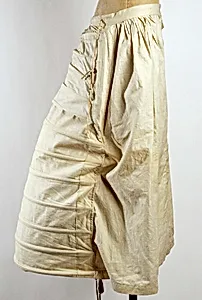
Step into the opulent world 1880s fashion with *Bustle*, a cotton undergarment from the Metropolitan of Art's Costume Institute Dating to 1880–85, this piece—likely American or European—exemplifies the era's dramatic silhouettes, where women enhanced their figures with padded supports to create a pronounced posterior curve. Crafted from everyday cotton, it highlights the practical yet transformative role of textiles in everyday luxury. During the late Victorian period,les like this one redefined femininity, countering the earlier hoop skirts of the 1860s with a more rear-focused fullness that emphasized posture and elegance. Worn beneath elaborate gowns, they symbolized social status and the era's obsession with hourglass proportions, influencing everything from ballroom dances to portrait photography. Though the artist remains unknown, the garment's survival speaks to its cultural resonance. Generously gifted to the Met in 1944 by Vassar College's Experimental Theater, *Bustle* may have graced stage costumes, bridging historical fashion with performative arts. A testament to 19th-century ingenuity, it invites us to ponder how clothing shapes identity. (198 words)