
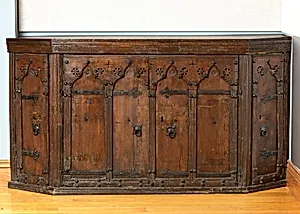
Cabinet (installed with 1975.1.2017)
Unknown Artist
ca. 1400 (rebuilt, 20th century)
Medium
Walnut, iron.
Dimensions
H. 93.3 cm, W. 75.3 cm, D. 48.5 cm
Classification
Woodwork-Furniture
Culture
Italian, Umbria
Department
Robert Lehman Collection
Museum
Metropolitan Museum of Art, New York, NY
Credit
Robert Lehman Collection, 1975
Accession Number
1975.1.2018
Rights
Public Domain
Art Historical Context
This walnut cabinet, crafted in Umbria, Italy, around 1400 and later rebuilt in the twentieth century, offers a window into late medieval domestic life. Made of walnut with iron fittings, the piece reflects the practical needs of the era while showcasing the region’s woodworking traditions. Umbrian artisans favored walnut for its rich grain and durability, often combining it with sturdy iron hardware for locks, hinges, and decorative straps that protected valuable contents. As furniture from the transition between the Gothic and early Renaissance periods, such cabinets served both storage and display functions in homes or ecclesiastical settings. Their compact form and robust construction speak to a time when personal belongings required secure, portable housing amid frequent travel and uncertain conditions. The twentieth-century rebuilding highlights ongoing efforts to preserve these rare survivals, allowing modern viewers to appreciate the craftsmanship of anonymous medieval makers. Measuring just over three feet tall, the cabinet’s modest scale suggests it was designed for intimate spaces rather than grand halls. Its presence in the Robert Lehman Collection at The Metropolitan Museum of Art underscores the enduring appeal of Italian woodwork from this pivotal historical moment.