
Cabinet or Double Hutch
Unknown Artist
probably 19th or 20th century (15th century style)
Medium
Oak
Dimensions
49 1/4 × 48 3/4 × 20 1/2 in. (125.1 × 123.8 × 52.1 cm)
Classification
Woodwork-Furniture
Culture
British
Department
Medieval Art
Museum
Metropolitan Museum of Art, New York, NY
Credit
Rogers Fund, 1909
Accession Number
09.202.4
Rights
Public Domain
Art Historical Context
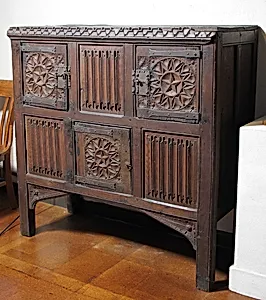
This impressive oak cabinet, or double hutch, stands as a fine example of British woodwork that channels the robust aesthetics of 15th-century furniture, though it was likely crafted in the 19th or 20th century. nearly 4 feet tall and wide, its sturdy form features the characteristic vertical panels and architectural framing typical of Gothic Revival pieces, evoking the grand cupboards once used in great halls to store valuables or display plate. Acquired through the Rogers Fund in 1909 and housed in The Metropolitan Museum of Art's Medieval Art department, it bridges historical revival with Victorian-era nostalgia for the Middle Ages. Oak, a hallmark of British furniture-making, was prized for its durability and rich grain, allowing carpenters to carve intricate details that mimic medieval joinery techniques like mortise-and-tenon construction. This cabinet's imitation of 15th-century style reflects the 19th-century Arts and Crafts movement's admiration for pre-industrial craftsmanship, when designers sought to revive "honest" handiwork amid rapid industrialization. Culturally, such hutches were status symbols in British homes, blending utility with ornament to showcase wealth and heritage. Visitors will appreciate how this piece transports us to a time of castle banquets and manor houses, reminding us of furniture's role in everyday medieval life—practical yet profoundly artistic.