
Medium
Decorative Arts-Furniture
Classification
Decorative Arts-Furniture
Department
Smithsonian Collection
Museum
Smithsonian American Art Museum
Credit
Smithsonian American Art Museum, Gift of Flora E. H. Shawan from the Ferdinand Howald Collection
Accession Number
1967.82.30
Rights
Public Domain
Tags
Art Historical Context
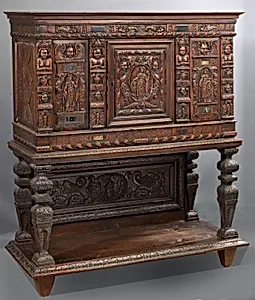
Nestled in the Smithsonian American Art Museum's collection decorative arts, this elegant chest exemplifies the masterful craftsmanship of an unidentified German artisan. As a piece of furniture classified under decorative arts, it highlights the fusion of utility and artistry typical in European cabinetmaking traditions. The "full length" view reveals its substantial form, likely designed for storage while serving as a statement of status in a domestic setting—chests were essential household items, often richly ornamented to showcase wealth and taste. Though the exact date remains unknown, its German origins evoke the rich heritage of woodworking excellence from regions like the Rhineland or Bavaria, where guilds honed techniques in joinery, carving, and inlay. Such chests were cultural touchstones, passed down through generations or used in bridal trousseaus, blending everyday function with symbolic importance. Donated by Flora E. H. Shawan from the esteemed Ferdinand Howald Collection, it bridges Old World artistry with American collecting passions, offering visitors a tangible link to centuries of European design innovation. (178 words)
About the Artist
Unidentified (German)
**German, Franconia (active ca. 1485–1500)** was an anonymous artist from the Franconian region of northern Bavaria, Germany, renowned for his contributions to late Gothic graphic arts. Little is known of his early life or training, as details about many anonymous masters from this era remain undocumented. Franconia, with its vibrant artistic centers like Nuremberg, fostered a rich tradition of re...