
Cakes and Food Made of Seaweed
19th century
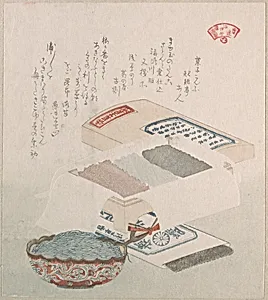
Medium
Part of an album of woodblock prints (surimono); ink and color on paper
Dimensions
8 1/4 x 7 1/4 in. (21 x 18.4 cm)
Classification
Prints
Culture
Japan
Department
Asian Art
Museum
Metropolitan Museum of Art, New York, NY
Credit
H. O. Havemeyer Collection, Bequest of Mrs. H. O. Havemeyer, 1929
Accession Number
JP2290
Rights
Public Domain
Tags
Art Historical Context
Behold *Cakes and Food Made Seaweed*, a delicate 19th-century woodblock print byo Shunman, a of Japan's ukiyo-e tradition. Part of a luxurious surimono album—specially commissioned prints often exchanged as New Year's greetings—this intimate work (8¼ x 7¼ in.) captures an array of edible delights crafted from seaweed, rendered in vibrant ink and color on paper.man's precise lines and subtle shading evoke the textures of these whimsical confections, blending everyday cuisine with artistic whimsy. Surimono like this one were elite productions, featuring high-quality printing techniques such as embossing and mica flecks for a tactile, shimmering effect, reserved for poetry lovers and patrons. In Edo-period Japan (1603–1868), such prints celebrated seasonal foods, highlighting seaweed's vital role in the culture—from nutritious nori wraps to festive wagashi sweets. This piece reflects the era's fascination with *oshimono* (novelty foods), merging culinary innovation with visual poetry. Housed in the Metropolitan Museum of Art's H. O. Havemeyer Collection, it offers a tasty glimpse into Japan's refined print culture, where art and appetite intertwined. A perfect morsel for pondering how everyday ingredients inspired timeless beauty.
About the Artist
Kubo Shunman · 1757–1820
Japanese, 1757–1820