
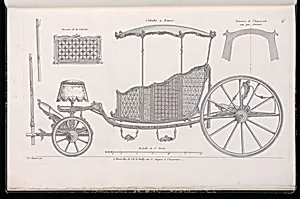
Calèche à Bancs
Medium
Bound print
Classification
Bound print
Department
Smithsonian Collection
Museum
Smithsonian American Art Museum
Credit
Purchased for the Museum by the Advisory Council
Accession Number
1921-6-272-6
Rights
Public Domain
About this artwork
Research in Progress
Art Historical Context
"Calèche à Bancs" is a captivating bound print by French artist Jean-François Chopard active in the 18th century, created around 1750. This work depicts a elegant calèche—a light, open carriage with benches—showcasing the refined transportation of France's aristocratic elite during the Rococo era. As a bound print, it likely formed part of a collected volume of designs, a common practice among artisans and collectors for preserving intricate illustrations of vehicles, architecture, and decorative motifs. In the mid-18th century, such prints served both artistic and practical purposes, disseminating fashionable carriage designs to coachbuilders across Europe. Chopard's rendering highlights the period's emphasis on graceful lines, ornate detailing, and functional beauty, reflecting the opulence of pre-Revolutionary France. Bound prints like this were prized for their portability and durability, allowing enthusiasts to study and replicate luxurious conveyances. Acquired for the Smithsonian American Art Museum through the Advisory Council, this piece underscores the museum's commitment to European influences on American decorative arts. With ongoing research, "Calèche à Bancs" invites visitors to ponder the artistry behind everyday elegance in 18th-century life.