
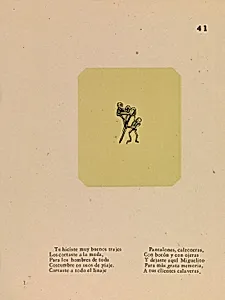
Calavera of the Tailor
Medium
Graphic Arts-Print
Classification
Graphic Arts-Print
Department
Smithsonian Collection
Museum
Smithsonian American Art Museum
Credit
Smithsonian American Art Museum, Gift of Jack Lord
Accession Number
1971.439.41
Rights
Public Domain
Tags
Art Historical Context
Step into the whimsical yet poignant world of José Guadalupe Pos's *Calavera of the Tail*, a striking graphic print from the Smithsonian American Art. Created by the masterful Mexican artist (1852–1913) and published posthumously in 1947, this work captures a skeletal tailor at his trade, in bony hand, surrounded by the tools of his profession. Posada,ailing from Aguascal and spending his later years in Mexico City, a pioneer of Mexican printmaking, using bold zinc relief techniques to produce affordable, satirical broadsheets that reached everyday people. Posada's *calaveras*—skeletons personifying various figures from society—hold immense historical significance as critiques of class, power, and mortality during Mexico's Porfiriato era. Here, the tailor skeleton embodies the Day of the Dead (Día de los Muertos) tradition, reminding us that death levels all, from peasants to elites. His stark black-and-white style, with exaggerated features and dynamic lines, influenced later Mexican artists like Diego Rivera and popularized folk art motifs. This piece, gifted to the museum by Jack Lord, invites reflection on life's ironies. Gaze upon it and ponder: even the busiest tailor can't stitch his way out of fate's final measure. (198 words)