
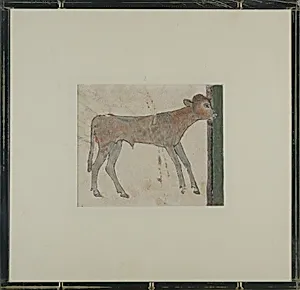
Calf, Tomb of Nebamun and Ipuky
ca. 1390–1349 B.C.
Medium
Tempera on paper
Dimensions
H. 9 cm (3 9/16 in); w. 11 cm (4 5/16 in), scale 1:1
Classification
Facsimile, Nebamun, Ipuky (TT 181), calf
Period
New Kingdom
Department
Egyptian Art
Museum
Metropolitan Museum of Art, New York, NY
Credit
Rogers Fund, 1930
Accession Number
30.4.159
Rights
Public Domain
Art Historical Context
This delicate tempera facsimile captures a charming detail of a calf from the tomb of Nebamun and Ipuky, two Theban officials who lived during Egypt’s New Kingdom, Dynasty 18. Created around 1390–1349 B.C., the original wall painting would have formed part of lively agricultural or offering scenes intended to sustain the deceased in the afterlife. Such imagery reflected the Egyptians’ deep connection to the natural world and their belief that depictions of abundance could magically provide for eternity. Norman de Garis Davies, a pioneering British Egyptologist and artist, produced this exact-scale copy on paper in the early twentieth century. Working with meticulous care, Davies used traditional tempera techniques to reproduce the ancient pigments and fluid lines, preserving colors and details that have often faded on the tomb walls themselves. His facsimiles, many now in the Metropolitan Museum’s collection, remain invaluable records of Egyptian art at its most vibrant. Visitors can appreciate how this small work bridges millennia, offering an intimate glimpse of daily life in ancient Thebes while highlighting the artistry of both the original painters and Davies’s faithful documentation.
About the Artist
Norman de Garis Davies · 1865–1941
Norman de Garis Davies (1865–1941) was a British Egyptologist and archaeological artist whose meticulous copies of ancient Egyptian tomb paintings constitute one of the most important records of pharaonic art ever made. Born in Ashton-under-Lyne, Lancashire, he originally trained for the ministry before being drawn into Egyptology through his involvement with the Egypt Exploration Fund in the 1890...