
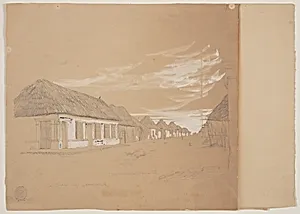
Calle de Commerce, Barranquilla, Colombia
Medium
architecture
Classification
architecture
Department
Smithsonian Collection
Museum
Smithsonian American Art Museum
Credit
Gift of Louis P. Church
Accession Number
1917-4-57
Rights
Public Domain
About this artwork
Research in Progress
Art Historical Context
**Calle de Commerce,anquilla, Colombia***Frederic Edwin Church (American, 18261900), May 1853* *Architecture; Smithsonian Collection, Smithsonian American Art Museum; Gift of Louis P.* Frederic Edwin Church, a leading of the Hudson River School known for his luminous landscapes, ventured to South America in 1853, a trip that ignited his fascination with exotic vistas. *Calle de Commerce* captures a street scene in Barranquilla, Colombia—a vital port city on the Caribbean coast—during this pivotal journey. Classified as architecture, this work likely documents the bustling commercial facades and urban rhythm of mid-19th-century Latin America, reflecting Church's keen eye for environmental detail beyond his famed canvases. Created just as photography emerged as a tool for artists, the piece offers a rare architectural glimpse from Church's expedition, inspired by explorer Alexander von Humboldt's romantic visions of the tropics. Barranquilla's commerce street symbolized economic vibrancy amid Colombia's growing trade networks, blending European influences with local vitality. Housed in the Smithsonian American Art Museum through a gift from Church's son Louis P. Church, this artifact underscores the artist's role as both painter and documentarian. Though research continues, it invites visitors to envision the humid air and lively markets that fueled Church's masterpieces like *The Heart of the Andes*. (198 words)