
Calligraphic Exercise in Latin (Cursive Script)
early 17th century
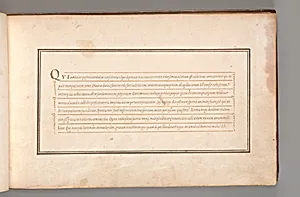
Medium
Pen and black and brown ink.
Dimensions
Overall: 6 3/4 × 11 1/16 in. (17.1 × 28.1 cm)
Classification
Albums|Drawings|Ornament & Architecture
Department
Drawings and Prints
Museum
Metropolitan Museum of Art, New York, NY
Credit
Purchase, Daniel Ergmann Gift, 2014
Accession Number
2014.96(4)
Rights
Public Domain
Art Historical Context
Step into the intricate world of 17th calligraphy with this *Calligraphic Exercise in Latin (Cursive Script, an anonymous work from the early 1600s. Crafted with pen and black and brown ink a modest sheet measuring 6 3/4 × 11 1/16 inches, it exemplifies the meticulous practice sheets used by scribes and students to master fluid writing forms. The cursive script—a flowing, connected style—allowed for speed and elegance in everyday correspondence, legal documents, and scholarly notes, contrasting with more rigid gothic scripts of prior eras. In the early 17th century, Latin remained the language of European intellectuals, clergy, and diplomats, making proficient cursive handwriting essential for efficiency amid the Renaissance's lingering emphasis on humanism and the Baroque era's ornate aesthetics. The use of dual ink tones—black for bold lines and brown for subtle shading—highlights the artist's technical skill, creating depth and rhythm on the page. Housed in an album within The Metropolitan Museum of Art's Drawings and Prints department (purchased with the Daniel Ergmann Gift in 2014), this piece reflects ornament and architecture classifications, suggesting its role in decorative arts training. Today, it offers a window into the unsung labor behind historical manuscripts, reminding us how calligraphy bridged art and utility, preserving knowledge in an age before print dominance. A testament to anonymous mastery!
About the Artist
Anonymous
In the vast tapestry of art history, "Anonymous" stands not as a singular individual but as a collective designation for countless unidentified creators whose works have endured across millennia. These artists, spanning prehistoric cave painters to medieval illuminators and folk craftsmen, produced the foundational layers of human visual culture. Prior to the Renaissance, when individual fame emer...