
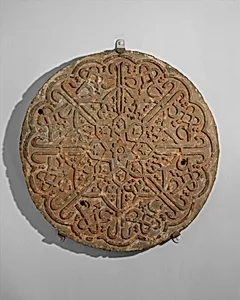
Calligraphic Roundel, inscribed "Ya 'Aziz" (Oh Mighty)
Unknown Artist
late 16th–early 17th century
Medium
Sandstone; carved, traces of pigment
Dimensions
D. 1 3/16 in. (3 cm) Diam. 18 1/2 in. (47 cm) Wt. 10 lbs. (4.5 kg)
Classification
Stone
Department
Islamic Art
Museum
Metropolitan Museum of Art, New York, NY
Credit
Edward Pearce Casey Fund, 1985
Accession Number
1985.240.1
Rights
Public Domain
Tags
Art Historical Context
This exquisite *Calligraphic Roundel, "Ya 'Aziz" (Oh Mighty)* a delicate sandstone panel from the late 16th early 17th century crafted in the Islamic artistic tradition. an impressive 18½ inches diameter but just 1⅛ inches thick and weighing only 10 pounds, its lightweight form it was designed for architecturalishment—perhaps adorning a mosque, palace, or tomb. The central inscription, one of the 99 beautiful names of Allah meaning "The Mighty" or "The Exalted invokes divine power and protection, a common motif in Islamic devotional art. Carved with masterful precision, the roundel showcases the elevated status of Arabic calligraphy in Islamic culture, where the written word often surpassed imagery as the highest art form. Traces of pigment hint at its original vibrant coloring, likely enhancing its visibility and spiritual resonance in dimly lit interiors. Produced during a golden age of Ottoman or Safavid craftsmanship, such pieces blended technical virtuosity with profound religious symbolism. Today, housed in the Metropolitan Museum of Art's Islamic Art department (Edward Pearce Casey Fund, 1985), this artifact invites visitors to appreciate how everyday stone became a vessel for the eternal, bridging artistry and faith across centuries.