
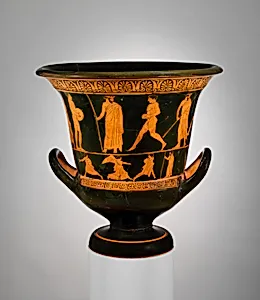
Calyx-krate
ca. 440 BCE
Medium
Terracotta
Dimensions
Other: 14 1/16 x 13 15/16 in. (35.7 x 35.4 cm)
Classification
Vases
Culture & Period
Greek, Attic · Classical
Department
Greek and Roman Art
Museum
Metropolitan Museum of Art, New York, NY
Credit
Rogers Fund, 1906
Accession Number
06.1021.173
Rights
Public Domain
Art Historical Context
Behold the **Calyx-krater**, masterful terracotta vessel crafted around 440 BCE by the enigmatic Painter of the Louvre Centromachy, an anonymousic artist named for his dynamic depictions of centauromachies—epic battles between humans and mythical centaurs. This Classical Greek vase, standing at 14 1/16 x 13 15/16 inches, exemplifies the red-figure technique, where figures emerge in rich orange clay against a glossy black background painted with refined slip. Its distinctive calyx shape, resembling a flower bud, allowed it to serve as a grand mixing bowl for wine and water during symposia, the social heart of ancient Athenian life. In the golden age of Classical Athens, such kraters were not mere utensils but canvases for storytelling, blending everyday utility with profound mythology. The Painter of the Louvre Centauromachy contributed to the late red-figure tradition, bridging the High Classical style's idealized anatomy and serene composure with emerging trends toward more fluid narratives. Acquired through the Rogers Fund in 1906, this piece now graces the Metropolitan Museum of Art's Greek and Roman Art department, offering a window into the Periclean era's cultural splendor—where art, philosophy, and revelry intertwined. Fun fact: Calyx-kraters like this were prized status symbols, often the centerpiece of elite gatherings, evoking the heroic tales of Homer and symbolizing civilized harmony amid chaos.