
唐 陶駱駝|Camel
Unknown Artist
7th–8th century
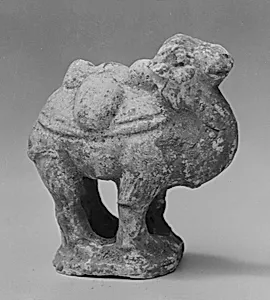
Medium
Earthenware
Dimensions
H. 3 1/4 in. (8.3 cm)
Classification
Ceramics
Culture & Period
China · Tang dynasty (618–907)
Department
Asian Art
Museum
Metropolitan Museum of Art, New York, NY
Credit
Rogers Fund, 1930
Accession Number
30.76.72
Rights
Public Domain
Tags
Art Historical Context
This charming earthenware camel, crafted by an unknown artist during China's Tang dynasty (618–907), dates to the 7th–8th century—a golden era of cultural flourishing and international exchange. Standing just 3¼ inches (8.3 cm) tall, this petite figurine captures the majestic form of the Bactrian camel, vital beast of burden along the Silk Road trade routes that linked China to Central Asia, Persia, and beyond Tang artisans produced such camels in vast numbers as mingqi, or spirit objects, placed in tombs to accompany the deceased into the afterlife, symbolizing prosperity, travel, and the empire's cosmopolitan spirit. Earthenware, fired at lower temperatures than porcelain, allowed for detailed hand-modeling and subtle surface textures that evoke the camel's shaggy fur and sturdy build. While Tang ceramics are renowned for their vibrant sancai (three-color) glazes, unglazed pieces like this highlight the sculptor's skill in form and proportion, reflecting everyday life amid the dynasty's economic boom fueled by silk, spices, and exotic goods transported by camel caravans. Today, housed in the Metropolitan Museum of Art's Asian Art Department (Rogers Fund, 1930), this Camel offers a tangible glimpse into Tang China's worldly ambitions, reminding us how art bridged distant worlds.