
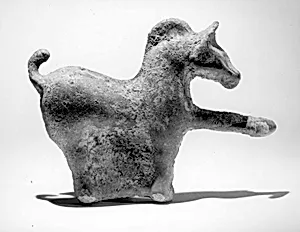
Belt Buckle in Shape of Horse
Unknown Artist
Medium
Bronze
Dimensions
H. 2 3/4 in. (7 cm); w. 3 1/2 in. (8.9 cm); D. 3/4 in. (1.9 cm)
Classification
Metalwork
Culture & Period
Japan · Kofun period (ca. 300–710)
Department
Asian Art
Museum
Metropolitan Museum of Art, New York, NY
Credit
The Harry G. C. Packard Collection of Asian Art, Gift of Harry G. C. Packard, and Purchase, Fletcher, Rogers, Harris Brisbane Dick, and Louis V. Bell Funds, Joseph Pulitzer Bequest, and The Annenberg Fund Inc. Gift, 1975
Accession Number
1975.268.390
Rights
Public Domain
Tags
Art Historical Context
This exquisite bronze belt buckle, shaped as a spirited horse, hails from Japan's Kofun period (. 300–710 CE), a time of monumental burial mounds and emerging centralized power. Measuring just 2¾ inches high and 3½ inches, its compact form belies its cultural weight, as both a practical accessory and a symbol of prestige. Horses, newly introduced from the Asian continent, represented elite status, speed, and martial prowess, often adorning the gear of warriors and chieftains buried in these grand kofun tombs. Bronze metalwork like this exemplifies the period's advanced casting techniques, likely employing lost-wax methods to capture the horse's dynamic stance and intricate details—from flowing mane to taut muscles—in remarkable realism. Such openwork buckles were not mere fasteners but status symbols, reflecting continental influences via Korea and China while asserting Japanese innovation in Asian Art traditions. Now part of The Metropolitan Museum of Art's Harry G. C. Packard Collection, this piece invites us to imagine ancient wearers galloping across misty plains, bridging everyday life with the afterlife's grandeur. A testament to Kofun artistry, it whispers of a world where utility met mythology.