
Cameo
ca. 1835
Medium
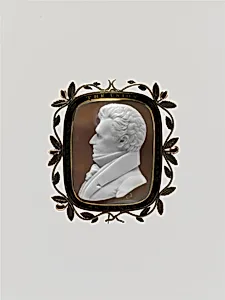
Helmet-conch shell, gold, and enamel
Dimensions
2 1/2 x 2 1/4 in. (6.4 x 5.7 cm)
Classification
Brooch
Culture
American
Department
The American Wing
Museum
Metropolitan Museum of Art, New York, NY
Credit
Purchase, Susan and Jon Rotenstreich Gift, 2000
Accession Number
2000.562
Rights
Public Domain
Tags
Art Historical Context
This exquisite *Cameo*, created around 1835 by George W. Jamison and Rose, captures the refined artistry of early American decorative objects. Carved as a profile portrait of a man, it exemplifies the neoclassical revival popular in the United States during the 1830s, when cameos evoked the grandeur of ancient Roman gems. Displayed in The American Wing of the Metropolitan Museum of Art, this small jewel (just 2½ x 2¼ inches) highlights the era's fascination with classical profiles, often worn as brooches or pendants by the fashionable elite. Crafted from a helmet-conch shell—a durable, iridescent marine material prized for its layered colors—the cameo showcases masterful intaglio carving techniques. The artists layered gold and enamel to enhance details, creating striking contrasts between the raised figure and recessed background. Such shell cameos were labor-intensive, requiring precision to exploit the shell's natural hues for lifelike skin tones and clothing. As a rare surviving example of American cameo production, this piece underscores the burgeoning skill of U.S. artisans in competing with European imports. Acquired through the Susan and Jon Rotenstreich Gift in 2000, it invites visitors to appreciate how everyday luxury objects preserved personal likenesses and cultural aspirations in antebellum America.
About the Artist
George W. Jamison|William Rose (American| ) · 1810 |1839 –1868 |1850
American, New York 1810–1868 Yonkers, New York|active 1839–50