
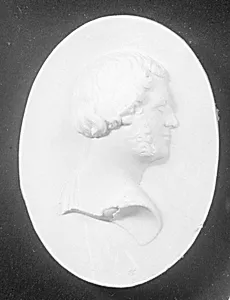
Cameo of a Gentleman
ca. 1850
Medium
Plaster
Dimensions
1 7/8 x 1 3/8 in. (4.8 x 3.5 cm)
Classification
Cameo
Culture
American
Department
The American Wing
Museum
Metropolitan Museum of Art, New York, NY
Credit
Gift of Dr. Clark S. Marlor, 1983
Accession Number
1983.519.2
Rights
Public Domain
Tags
Art Historical Context
In the mid-19th century, sculptor Erastus Dow Palmer the refined likeness of an unnamed gentleman in this delicate plaster cameo, dated around 1850. Measuring just 1 7/8 x 1 3/8 inches, the intimate profile portrait exemplifies the neoclassical revival popular in the United States during this era. Palmer, a self-taught engraver from New York who rose to prominence as a cameo specialist, skillfully rendered the subject's noble features—high forehead, aquiline nose, and composed expression—in high relief, evoking ancient Roman intaglios while celebrating contemporary American identity. Plaster, though softer than Palmer's more famous shell or marble works, served as an ideal medium for detailed prototypes or affordable keepsakes, often worn as jewelry or displayed in parlors. This technique highlighted Palmer's mastery of intricate carving, blending craft with fine art and earning him acclaim at exhibitions like the 1853 New York Crystal Palace. Housed in The Metropolitan Museum of Art's American Wing, the cameo reflects the era's fascination with personalized portraiture amid rapid industrialization and cultural aspiration. A gift from Dr. Clark S. Marlor in 1983, this piece invites visitors to ponder the gentleman's story—a businessman, perhaps, or a family patriarch—frozen in quiet elegance, bridging personal memory with national artistic heritage.