
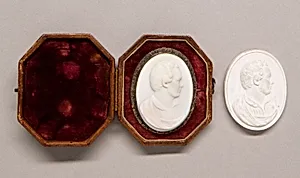
Cameo of John J. Francis
1846–49
Medium
Plaster and silver gilt
Dimensions
5 × 3.8 cm (2 × 1 1/2 in.)
Classification
jewelry
Department
Arts of the Americas
Museum
Art Institute of Chicago
Accession Number
90616
Rights
Public Domain
Art Historical Context
Behold the delicate *Cameo of John J. Francis* by Erastus Dow Palmer, crafted between 1846 and 1849. This intimate portrait, measuring just 5 × 3.8 cm, captures the likeness of its subject in high relief against a contrasting background, framed in silver gilt. Classified as jewelry from the Art Institute of Chicago's Arts of the Americas collection, it exemplifies the era's fascination with wearable art—likely intended as a brooch or pendant for personal adornment. Palmer, a pioneering American cameo artist active in mid-19th-century New York, mastered the art of carving intricate profiles from shell, gemstones, and molds like this plaster example. The use of plaster allowed for precise detailing and replication, while the silver gilt added a luxurious sheen, evoking classical antiquity amid the neoclassical revival popular in Victorian America. Cameos like this were not mere trinkets; they symbolized sentiment, memory, and social status, often commissioned for loved ones or prominent figures. This piece highlights Palmer's skill in miniature portraiture, bridging sculpture and jewelry during a time when American artists drew inspiration from European traditions. Visitors, imagine pinning this gem to your lapel—a tiny window into 19th-century elegance and personal devotion.