
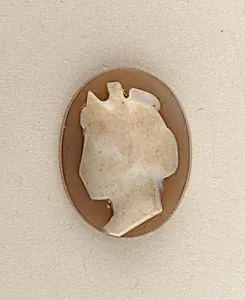
Cameo
late 19th century
Medium
jewelry
Classification
jewelry
Department
Smithsonian Collection
Museum
Smithsonian American Art Museum
Credit
Gift of The French Institute
Accession Number
1949-68-31
Rights
Public Domain
About this artwork
Research in Progress
Art Historical Context
This exquisite cameo, a delicate piece of late 19th-century jewelry the Smithsonian American Art Museum exemplifies the Victorian era's fascination with intricate personal adornments. Crafted an unknown artist, cameos like this one typically feature a raised relief carving—often on shell, agate, or gemstone—contrasting a foreground figure against a recessed background. Popular during the Victorian period (1837–1901), these jewels served as both fashion statements and sentimental tokens, frequently depicting classical profiles, mythological scenes, portraits of loved ones. Donated as a gift from The French Institute, this cameo hints at transatlantic cultural exchange, blending French artisanal finesse with American collecting tastes. France was a hub for cameo production in the 19th century, where skilled engravers elevated the technique to miniature sculpture. Worn as brooches, pendants, or rings, such pieces symbolized elegance and refinement, bridging fine art and everyday wear. Though research continues, this artifact invites us to appreciate the anonymous craftsmanship that captured beauty in miniature, reflecting an age of romantic nostalgia and technical virtuosity.
About the Artist
Unknown
The artist designated as "Unknown" in our virtual museum's collection exemplifies a poignant chapter in art history: creators whose identities have faded into obscurity despite the enduring power of their work. With only one known artwork attributed to them in our holdings, this figure represents countless anonymous hands that shaped visual culture across centuries. Museums worldwide, including th...