
Candlestick
Unknown Artist
12th century
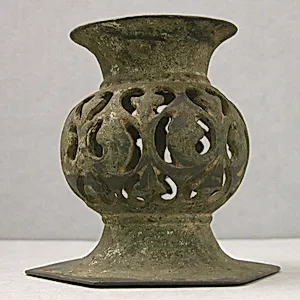
Medium
Bronze
Dimensions
H. 4 11/16 in. (11.9 cm) Diam. 4 1/8 in. (10.5 cm) Wt. 29.2 oz. (827.899 g)
Classification
Metal
Department
Islamic Art
Museum
Metropolitan Museum of Art, New York, NY
Credit
Purchase, Edward C. Moore Jr. Gift, 1927
Accession Number
27.13.14
Rights
Public Domain
Art Historical Context
This 12th-century bronze candlestick from the Islamic world exemplifies the refined metalworking traditions of the medieval Islamic era. Crafted by an unknown artist, its modest dimensions—standing 4 11/16 inches (11.9 cm) tall with a 4 1/8-inch (10.5 cm) diameter and weighing a substantial 29.2 ounces (827.9 g)—reveal a practical yet elegant design suited for illuminating homes, mosques, or scholarly gatherings. Acquired by the Metropolitan Museum of Art in 1927 through the Edward C. Moore Jr. Gift, it now graces the museum's Islamic Art department, offering a glimpse into everyday luxury. Bronze was a prized medium in 12th-century Islamic workshops, particularly in regions like Syria, Egypt, or Iraq, where artisans excelled in casting durable forms for lighting objects essential before widespread electricity. These candlesticks often blended utility with subtle artistry, supporting flames that evoked the spiritual symbolism of light in Islamic culture, as referenced in the Quran. Though specific decorative details are not noted, the object's survival underscores the technical prowess of Islamic metalworkers, who favored bronze for its malleability and longevity. For visitors, this unassuming piece whispers of a vibrant world where craftsmanship elevated the ordinary, inviting reflection on the ingenuity of artisans whose names time has obscured.