
Vase
Unknown Artist
17th century
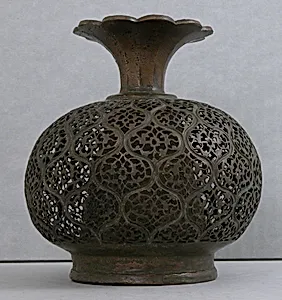
Medium
Bronze; cast with pierced decoration
Dimensions
H. 6 3/8 in. (16.1 cm)
Classification
Metal
Department
Islamic Art
Museum
Metropolitan Museum of Art, New York, NY
Credit
Purchase, Gift of George Blumenthal, by exchange, 1982
Accession Number
1982.65
Rights
Public Domain
Art Historical Context
This elegant 17th-century bronze vase standing just over 6 inches tall, exemplifies the refined metalworking traditions of Islamic art. Crafted by an unknown artist, its slender form is adorned with intricate pierced decoration—delicate openwork patterns created through casting and meticulous perforation. This technique not only lightens the metal's weight but also transforms the vase into a sculptural lantern, casting enchanting shadow patterns when illuminated, a hallmark of Islamic craftsmanship that blended utility with poetic beauty. In the opulent courts of the th century, such vases served both practical purposes—like holding flowers or spices—and as symbols of prestige. The pierced motifs, often floral or geometric, reflect the Islamic aversion to figurative representation, favoring abstract designs inspired by nature and mathematics. This piece, acquired by the Metropolitan Museum of Art in 1982 through a generous exchange gift, highlights the technical virtuosity of artisans from regions like the Ottoman Empire or Persia, where bronze was prized for its durability and luster. Today, it invites visitors to appreciate the interplay of light and shadow, a sensory experience central to Islamic decorative arts. A modest yet masterful survivor of its era, it whispers of distant workshops where skill met spirituality.