
Candlestick (one of a pair)
ca. 1760–65
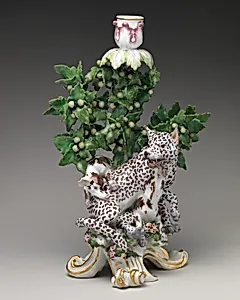
Medium
Soft-paste porcelain
Dimensions
Height: 11 5/16 in. (28.7 cm)
Classification
Ceramics-Porcelain
Culture
British, Chelsea
Department
European Sculpture and Decorative Arts
Museum
Metropolitan Museum of Art, New York, NY
Credit
Gift of Mrs. Francis P. Garvan, in memory of Francis P. Garvan, 1954
Accession Number
54.163.6
Rights
Public Domain
Tags
Art Historical Context
This elegant candlestick, one of a pair produced by the renowned Chelsea Porcelain Manuf around 1760–65, the height of British ceramic artistry during the mid-18th century. at 11 5/16 inches tall, it was crafted from soft-paste porcelain—a pioneering European alternative to true Chinese hard-paste porcelain. Chelsea's soft-paste formula, blending clay, ground glass (frit), and soapstone, allowed for delicate molding, intricate detailing, and vibrant enamel colors, making it prized for both functionality and ornament. Founded in the 1740s in Chelsea, London, the manufactory was among England's first to rival continental giants like Meissen and Sèvres. Operating under royal patronage during its "Gold Anchor" period (c. 1750s–1769), it specialized in luxurious tablewares and figurines inspired by Rococo tastes—playful, naturalistic motifs of animals and plants adorn this piece, evoking the era's fascination with nature's whimsy amid aristocratic dining rituals. These candlesticks would have illuminated grand supper tables, blending utility with opulent display. Today, housed in the Metropolitan Museum of Art's European Sculpture and Decorative Arts department (gift of Mrs. Francis P. Garvan, 1954), it showcases Chelsea's technical mastery and cultural prestige, a testament to Britain's porcelain golden age before the factory's closure in 1770.
About the Artist
Chelsea Porcelain Manufactory · 1744–1784
**Chelsea Porcelain Manufactory** The Chelsea Porcelain Manufactory, Britain's pioneering porcelain enterprise, was founded around 1743 in Chelsea, London, by two Huguenot silversmiths: Nicholas Sprimont from Liège and Charles Gouyn. Sprimont, trained in Paris as a goldsmith before immigrating to England, brought his expertise in luxury metalwork to the venture, while Gouyn handled early sales th...