
Cantle Plate
Unknown Artist
ca. 1550–60
Medium
Steel, gold
Dimensions
H. 6 1/2 in. (16.5 cm); W. 19 1/2 in. (49.5 cm); Wt. 2 lb. 8 oz. (1.13 kg)
Classification
Equestrian Equipment-Saddles
Culture
Italian, possibly Milan
Department
Arms and Armor
Museum
Metropolitan Museum of Art, New York, NY
Credit
Fletcher Fund, 1921
Accession Number
21.102.10
Rights
Public Domain
Tags
Art Historical Context
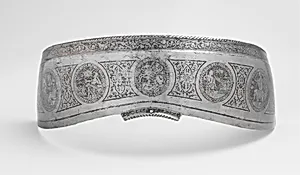
This exquisite cantle plate, dating to around 1550–60, is a rare survivor from Renaissance Italy—likely Milan, a renowned center for arms and armor production. Forming the raised rear portion of a high-status saddle, it protected the rider's back while adding grandeur to equestrian gear. Crafted from steel inlaid or gilded with gold, its robust dimensions (6½ inches high, 19½ inches wide, weighing over 2 pounds) balanced functionality with opulence, ideal for tournaments, parades, or elite cavalry. The plate's artistic significance lies in its intricate decoration, featuring dynamic scenes of men, horses, and even elephants—evoking exotic tales from Roman history or fantastical narratives popular in 16th-century courts. Milanese workshops excelled in such techniques, blending repoussé reliefs, engraving, and gold embellishment to create gleaming surfaces that caught the light during processionals. This fusion of martial utility and Renaissance artistry underscores the era's celebration of chivalry and humanism. Acquired through the Fletcher Fund in 1921, this piece at The Metropolitan Museum of Art offers a glimpse into the lavish world of Italian nobility, where horse gear rivaled personal armor in splendor. A testament to anonymous mastery, it reminds us how everyday equestrian tools became canvases for cultural storytelling.