
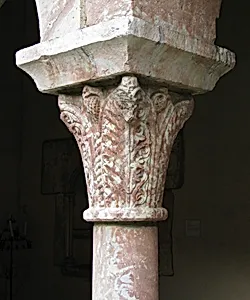
Capital
Unknown Artist
ca. 1130–40
Medium
Marble
Dimensions
Overall: 15 1/2 x 17 x 15 1/2 in. (39.4 x 43.2 x 39.4 cm)
Classification
Sculpture-Architectural
Culture
Catalan
Department
The Cloisters
Museum
Metropolitan Museum of Art, New York, NY
Credit
The Cloisters Collection, 1925
Accession Number
25.120.861
Rights
Public Domain
Art Historical Context
This exquisite marble capital, crafted around 1130–40 by an unknown artist from Catalonia, exemplifies the robust architectural sculpture of the Romanesque period. Measuring a compact 15½ x 17 x 15½ inches, it would have crowned a column or pilaster in a church or monastery, serving both structural and decorative purposes. Displayed in The Cloisters at the Metropolitan Museum of Art as part of the 1925 Cloisters Collection, it transports visitors to the medieval world of northeastern Spain. Catalan Romanesque art flourished during this era, amid a boom in church construction influenced by pilgrimage routes like the Camino de Santiago. Capitals like this one often featured intricate carvings—though motifs here remain unrecorded—symbolizing theological themes or warding off evil through stylized forms. The choice of durable marble underscores the era's emphasis on permanence, blending Byzantine and local Iberian traditions into bold, volumetric designs that prioritized spiritual symbolism over classical realism. As a survivor of centuries, this capital invites us to ponder the anonymous sculptor's skill in transforming raw stone into a sacred focal point, echoing the vibrant faith and craftsmanship of 12th-century Catalonia. A true gem for medieval art lovers!