
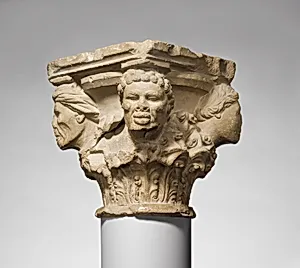
Capital with Four Heads
Unknown Artist
ca. 1225–50
Medium
Limestone
Dimensions
Overall: 14 1/8 x 13 x 13 in. (35.9 x 33 x 33 cm) Base: 7 3/4 in. (19.7 cm) Hole for Pin Mount: 9/16 x 2 3/16 in. (1.4 x 5.5 cm) weight: 108lb. (49kg)
Classification
Sculpture-Architectural
Culture
Italian
Department
The Cloisters
Museum
Metropolitan Museum of Art, New York, NY
Credit
Gift of James Hazen Hyde, 1955
Accession Number
55.66
Rights
Public Domain
Tags
Art Historical Context
Step into the medieval world at The Cloisters with this striking *Capital with Four Heads*, a limestone architectural sculpture crafted by an unknown Italian artist around 1225–50. Measuring about 14 inches tall and weighing a hefty 108 pounds, this cube-shaped capital—topped with a practical hole for pin mounting—once crowned a column in a church or cloister, supporting arches while delighting worshippers below. Its modest dimensions belie its robust presence, carved from durable limestone typical of Italian medieval building. The four carved heads, emerging from the capital's corners, exemplify the whimsical stonework of the High Middle Ages, blending functionality with expressive decoration. During this era of Gothic experimentation in Italy, architects and sculptors adorned capitals with human, animal, or fantastical motifs to symbolize spiritual themes or ward off evil, infusing sacred spaces with life. Though the exact provenance remains mysterious, its Italian origin ties it to the vibrant tradition of Romanesque-to-Gothic transitions, where such elements humanized grand cathedrals. A generous gift from James Hazen Hyde in 1955 to the Metropolitan Museum of Art, this piece invites us to ponder the anonymous hands that shaped it—master masons whose skill endures centuries later. Perfect for contemplating the artistry hidden in architecture!