
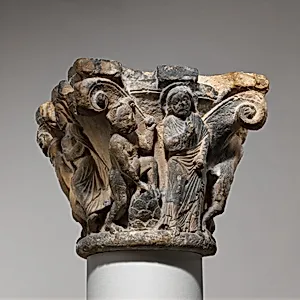
Capital with the Temptation of Jesus
Unknown Artist
ca. 1175–1200
Medium
Limestone
Dimensions
Overall: 10 5/8 x 11 3/4 x 11 3/4 in. (27 x 29.8 x 29.8 cm) weight: 76lb. (34.5kg)
Classification
Sculpture-Stone
Culture
North French
Department
Medieval Art
Museum
Metropolitan Museum of Art, New York, NY
Credit
Rogers Fund, 1921
Accession Number
21.21.1
Rights
Public Domain
Tags
Art Historical Context
This exquisite limestone capital, carved around 1175–1200 in France, once crowned a church column, serving as both structural support and a vivid biblical storyteller. Dating to the late Romanesque or early Gothic period, such sculpted capitals were common in medieval monasteries and cathedrals, where brought scripture to life for worshippers who couldn't read. Crafted from durable limestone, its compact size—about 11 inches square and weighing 76 pounds—highlights the sculptor's skill in transforming heavy stone into dynamic narrative relief. The artwork depicts the Temptation of Jesus, a key New Testament scene where the Devil challenges Christ in the wilderness with offers of bread, power, and divine proof (Matthew 4:1–11). Figures of Jesus and the Devil are likely intertwined in tense confrontation, embodying the era's fascination with moral drama and the triumph of faith over evil. The North French style often features expressive, elongated forms and intricate detailing, making theology accessible and engaging. Housed in the Metropolitan Museum of Art's Medieval Art department since 1921, this capital exemplifies how 12th-century artisans fused architecture with devotion, inviting visitors to ponder timeless struggles between temptation and virtue. A testament to anonymous mastery, it whispers stories from a devout age.