
Carmosine
1895
Medium
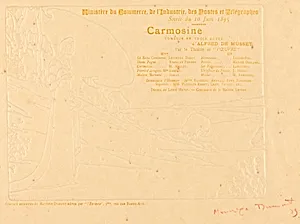
glyptograph on simili-japon paper
Dimensions
plate: 12.1 x 15.9 cm (4 3/4 x 6 1/4 in.) sheet: 22.9 x 28.3 cm (9 x 11 1/8 in.)
Classification
Department
CG-E
Museum
National Gallery of Art, Washington, D.C.
Credit
Gift of Martin and Liane W. Atlas
Accession Number
1997.96.3
Rights
Public Domain
Art Historical Context
Maurice Dumont’s 1895 print *Carmosine* offers a refined example of late-nineteenth-century experimentation in printmaking. Executed as a glyptograph on simili-japon paper, the work measures just 12.1 by 15.9 centimeters within the plate, yet the larger sheet allows generous margins that highlight the delicacy of the impression. Simili-japon, a Western paper crafted to echo the soft surface of Japanese sheets, was favored by artists seeking both fine and subtle tonal effects. The choice of glyptography—a precise engraving technique—reflects the period’s fascination with reviving and adapting older reproductive methods for artistic rather than purely commercial ends. Dumont’s modest scale invites intimate viewing, rewarding close attention to line and texture. Now part of the National Gallery of Art’s collection through the generous gift of Martin and Liane W. Atlas, the print preserves a quiet moment of technical innovation from the fin-de-siècle.