
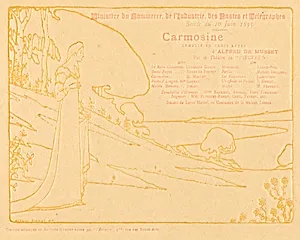
Carmosine
1895
Medium
glyptograph in pink and yellow on simili-japon paper
Dimensions
plate: 12 x 15.7 cm (4 3/4 x 6 3/16 in.) sheet: 22.7 x 28.4 cm (8 15/16 x 11 3/16 in.)
Classification
Department
CG-E
Museum
National Gallery of Art, Washington, D.C.
Credit
Given in memory of Martin Atlas by his friends
Accession Number
1998.71.2
Rights
Public Domain
Art Historical Context
**Carmosine** (1895) by Maurice is a delicate glyptograph print rendered in vibrant pink and yellow on simili-japon paper, a European imitation of fine Japanese washi prized for its absorbency and texture in high-quality reproductions. Measuring a modest plate size of 12 x 15.7 cm, this intimate work exemplifies the fin-de-siècle French fascination with color printing innovations, bridging fine art and technical precision. Glyptography, the medium here, was a pioneering relief printing process developed in the 1890s by Dumont and collaborators, allowing for rich, painterly effects through layered color inks without the bleeding common in earlier lithographs. This technique captured subtle gradations and luminosity, making artworks like *Carmosine*—possibly evoking the rosy hue of carmine—accessible to wider audiences while rivaling original paintings. Popular in Paris's avant-garde circles, it reflected the era's blend of Japonisme and decorative arts. Housed in the National Gallery of Art's print collection (gift in memory of Martin Atlas), *Carmosine* highlights Dumont's role in democratizing art through technology, inviting visitors to appreciate how 19th-century ingenuity transformed paper into a canvas of enduring beauty.