
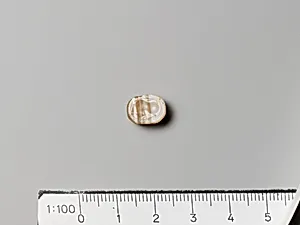
Carnelian scarab
Unknown Artist
3rd century BCE
Medium
Carnelian
Dimensions
H.: 5/16 x 7/16 in. (0.8 x 1.1 cm)
Classification
Gems
Culture & Period
Etruscan · Hellenistic
Department
Greek and Roman Art
Museum
Metropolitan Museum of Art, New York, NY
Credit
Bequest of W. Gedney Beatty, 1941
Accession Number
41.160.681
Rights
Public Domain
Tags
Art Historical Context
This exquisite carnelian scarab, dating to the 3rd century BCE, exemplifies Etruscan artistry during the Hellenistic period. Crafted by an unknown artist, this tiny gem—measuring just 5/16 x 7/16 inches—belongs to the Metropolitan Museum of Art's Greek and Roman Art collection, to the 1941 bequest of W. Gedney Beatty Scarabs, beetle-shaped amulets originating in Egypt, were widely adopted across the Mediterranean, symbolizing rebirth and protection. In Etruscan, they blended local tastes with Eastern influences, reflecting vibrant trade networks. Carved from carnelian, a durable red-orange chalcedony prized for its warm glow and hardness, the scarab likely served as a seal, jewelry, or talisman. Etruscan gem-cutters excelled in intaglio techniques, incising designs into the stone for stamping wax or clay. The motifs of bulls and scarabs evoke strength, fertility, and the sacred beetle, underscoring the Etruscans' fascination with animal symbolism and their role as cultural intermediaries between Greece, Egypt, and Rome. Though small, this piece offers a window into Hellenistic Etruria's cosmopolitan world, where everyday objects carried profound meaning. Visitors can marvel at its precision, a testament to ancient craftsmanship that endures today.