
Classification
Department
Smithsonian Collection
Museum
Smithsonian American Art Museum
Credit
Smithsonian American Art Museum
Accession Number
1907-7-2-b
Rights
Public Domain
About this artwork
Research in Progress
Art Historical Context
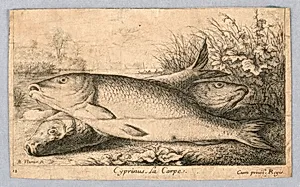
Albert Flamen's *Carp* (1664) is a captivating 17th-century print from Flemish Golden Age, a period when artists like Flamen excelled in meticulous depictions of the natural world. Born around 1620 in Antwerp, Flamen was a skilled engraver and painter renowned for his detailed studies of animals, fish, and landscapes. This work, housed in the Smithsonian American Art's collection, exemplifies the era's fascination with natural history, blending artistic precision with scientific observation amid Europe's burgeoning interest in botany and zoology. As a print—likely an etching or engraving, though the exact medium awaits further research—*Carp* showcases Flamen's mastery of line work to capture the fish's shimmering scales, sinuous form, and lifelike texture. Flemish prints like this were often produced in series, serving as both aesthetic treasures and educational tools for scholars and collectors. Created during a time of artistic rivalry between Flemish and Dutch masters, it reflects Baroque tendencies toward hyper-realism and wonder at nature's intricacies. Though research continues, *Carp* invites visitors to appreciate how 17th-century artists bridged art and science, turning everyday river dwellers into icons of beauty and curiosity. A testament to Flamen's enduring legacy, it reminds us of the period's innovative printmaking techniques that made such vivid imagery accessible beyond oil paintings.