
Carpet
Unknown Artist
18th century
Medium
Wool
Dimensions
Rug: L. 147 in. (373.4 cm) W. 97 in. (246.4 cm)
Classification
Textiles-Rugs
Department
Islamic Art
Museum
Metropolitan Museum of Art, New York, NY
Credit
Bequest of George Blumenthal, 1941
Accession Number
41.190.271
Rights
Public Domain
Art Historical Context
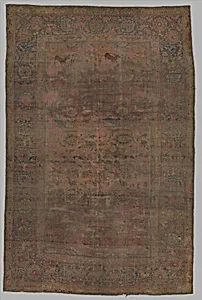
This magnificent 18th-century wool carpet, hailing from the Islamic Art collection at The Metropolitan Museum of Art, measures an impressive 147 inches long by 97 inches wide—large enough to anchor an entire room. Crafted by an unknown artist, it exemplifies the exquisite textile traditions of the Islamic world, where rugs served as both functional floor coverings and prized symbols of artistry and status. In the 18th century, Islamic carpets were often hand-knotted using durable wool fibers, a labor-intensive technique that allowed for intricate designs reflecting cultural motifs, geometry, and floral patterns inspired by nature and architecture. These pieces were essential in homes, mosques, and palaces across regions like Persia, Anatolia, and the Caucasus, blending utility with spiritual significance—rugs frequently appeared in prayer settings or as diplomatic gifts. Generously bequeathed by George Blumenthal in 1941, this carpet invites visitors to appreciate the anonymous mastery of Islamic weavers, whose works continue to influence global design today. Pause here to imagine it unfurled in a bustling 18th-century divan, its pile soft underfoot and vibrant with untold stories.