
Carpet Fragment
Unknown Artist
probably late 14th century
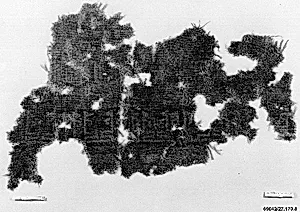
Medium
Wool (warp, weft and pile); single-warp (Spanish) knotted pile
Dimensions
Rug: L. 17 3/4 in. (45.1 cm) W. 10 1/2 in. (26.7 cm) Mount: H. 15 5/8 in. (21 3/4 cm) W. 21 3/4 in. (55.2 cm) D. 1 in. (2.5 cm)
Classification
Textiles-Rugs
Department
Islamic Art
Museum
Metropolitan Museum of Art, New York, NY
Credit
Rogers Fund, 1927
Accession Number
27.170.8
Rights
Public Domain
Art Historical Context
This exquisite carpet fragment, likely woven in late 14th-century Islamic Spain, offers a glimpse into the opulent textile traditions of Al-Andalus during the Nasrid dynasty. just 17¾ by 10½ inches, this woolen remnant—crafted with warp, weft, and pile—was once part of a larger rug, a luxury item prized for flooring palaces, adorning mosques, and even exporting to Christian Europe. Acquired through the Rogers Fund in 1927, it now graces the Metropolitan Museum of Art's Department of Islamic Art, highlighting the pinnacle of medieval craftsmanship. The fragment's single-warp (Spanish) knotted pile technique is a hallmark of Hispano-Moresque rugs, distinguishing it from the double-warp knots common in Persian or Ottoman weaves. In this method, artisans tied individual knots around single warps, creating a dense, durable pile ideal for intricate patterns and vibrant dyes derived from natural sources. Though the design details are not preserved here, such carpets often featured geometric motifs, arabesques, and stylized flora, symbolizing paradise gardens—a core theme in Islamic art. Surviving in such small pieces underscores their historical fragility; exposed to wear, moths, and time, these textiles were everyday treasures in multicultural Iberian society. For visitors, this fragment evokes the vibrant exchange between Muslim, Jewish, and Christian artisans, bridging medieval worlds through threads of wool.