
Carpet Fragment
Unknown Artist
late 16th–early 17th century
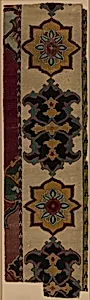
Medium
Cotton and silk (foundation), wool (pile); asymmetrically knotted pile
Dimensions
Mount: H. 51 1/2 in. (130.8 cm) W. 18 in. (45.7 cm)
Classification
Textiles-Rugs
Department
Islamic Art
Museum
Metropolitan Museum of Art, New York, NY
Credit
Purchase, The Page and Otto Marx Jr. Foundation Gift and Rogers Fund, 2001
Accession Number
2001.54
Rights
Public Domain
Art Historical Context
This exquisite carpet fragment, to the late 16 or early 17th century, hails from the Islamic world, a period renowned for masterful textile arts. Likely originating from Persia during the Safavid dynasty—a golden age of carpet production—the piece exemplifies the opulence of rugs that adorned palaces, mosques, and wealthy homes across the region. Though only a fragment survives, measuring about 51½ by 18 inches when mounted, it hints at the grandeur of its original form, traded along Silk Road routes and coveted by European collectors. Crafted with a foundation of cotton and silk threads supporting a lush wool pile, the carpet employs the asymmetrically knotted technique, a hallmark of Persian weaving. This "Turkish knot" variant (distinct from symmetrical Ottoman styles) allows for intricate patterns and fine detail, enabling weavers to create dense, durable surfaces that could withstand heavy use. The choice of silk for the foundation added strength and subtle sheen, while wool pile provided vibrant color and texture—materials sourced from nomadic shepherds and urban workshops. In the Metropolitan Museum of Art's Islamic Art collection, acquired in 2001 through generous gifts, this fragment invites us to marvel at centuries-old craftsmanship. Such rugs were not mere floor coverings but symbols of cultural prestige, blending artistry with everyday luxury in a vibrant tapestry tradition.