
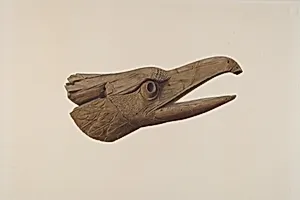
Carved Eagle Head
c. 1937
Medium
watercolor, colored pencil, and graphite on paperboard
Classification
Index of American Design
Department
CG-W
Museum
National Gallery of Art, Washington, D.C.
Credit
Index of American Design
Accession Number
1943.8.9738
Rights
Public Domain
Art Historical Context
Behold the striking *Carved Eagle Head*, meticulous rendering by artist Lucille Chabot around 1937. Created as part of the Index of American Design—a groundbreaking Federal Art Project under the Works Progress Administration (WPA)—this work captures the bold spirit of American folk art. Chabot's depiction preserves a carved wooden eagle head, a symbol of national pride often found in decorative sculptures, ship figureheads, or architectural motifs from the 18th and 19th centuries. Chabot employed a masterful blend of watercolor, colored pencil, and graphite on paperboard, techniques that allowed for vibrant hues, precise shading, and fine details. This mixed-media approach was ideal for the Index's mission: to document everyday American design objects with photographic accuracy and artistic flair during the Great Depression. The result is not just a record but a celebration of craftsmanship, highlighting the eagle's fierce gaze and textured feathers. Housed in the National Gallery of Art, this piece underscores the cultural importance of folk traditions in shaping American identity. It invites us to appreciate how WPA artists like Chabot safeguarded vanishing artifacts, bridging past artistry with modern appreciation. (198 words)