
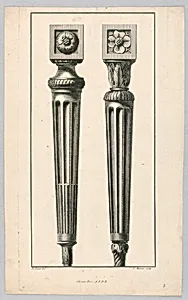
Carved Ornaments for Furniture Legs
18th century
Classification
Department
Smithsonian Collection
Museum
Smithsonian American Art Museum
Credit
Gift of Eleanor and Sarah Hewitt
Accession Number
1931-94-526
Rights
Public Domain
About this artwork
Research in Progress
Art Historical Context
**Carved Ornaments for Furniture** *Richard de Lalonde, French active 1780–, 18th century* Print; Smithsonian American Art Museum, Gift of Eleanor and Sarah Step into the refined world of 18th-century French decorative arts with this intriguing print by Richard de Lalonde, a active during the late 1780s to 1790s. Titled *Carved Ornaments for Legs*, it showcases intricate designs intended for elevating furniture with elegant carvings. As a print from this era, it served as a vital tool for artisans, allowing elaborate motifs to be shared widely across workshops and inspire luxurious home furnishings amid France's golden age of craftsmanship. Though the exact medium remains under research, its classification as a print highlights the period's innovative use of reproductive techniques to democratize high design. Lalonde's work reflects the sophisticated tastes of pre-Revolutionary France, where furniture legs—often adorned with scrolling, floral, or classical elements—became statements of status and style. Held in the Smithsonian American Art Museum's collection, gifted by collectors Eleanor and Sarah Hewitt, this piece connects visitors to the artistry that shaped Europe's elite interiors. Imagine cabriole legs transformed by these patterns, blending utility with opulence. While research continues, it invites us to appreciate how such designs influenced global decorative traditions, bridging art and everyday elegance.