
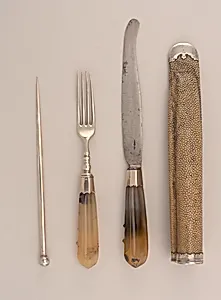
Case for Agate Handled Traveling Cutlery Set
ca. 1750
Classification
cutlery
Department
Smithsonian Collection
Museum
Smithsonian American Art Museum
Credit
The Robert L. Metzenberg Collection, gift of Eleanor L. Metzenberg
Accession Number
1985-103-118-a
Rights
Public Domain
About this artwork
Research in Progress
Art Historical Context
This elegant case once housed an agate-handled traveling cutlery set, dating to around 1750 and now preserved in the Smithsonian American Art Museum's collection. Donated through The Robert L. Metzenberg Collection by Eleanor L. Metzenberg, it exemplifies 18th-century portable luxury goods designed for affluent travelers. Such sets were essential for long journeys by coach or ship, when fine dining required personal silverware to maintain social status amid rough conditions. Crafted in an era of colonial expansion and Enlightenment refinement, the case highlights the fusion of functionality and opulence. Agate, a colorful semi-precious stone prized for its durability and beauty, adorned the handles, signaling wealth and taste among the elite. While research on this piece is ongoing, it reflects broader trends in decorative arts, where everyday objects became canvases for exquisite materials and craftsmanship. Today, it invites us to imagine the adventures of its owner—perhaps a merchant or diplomat crossing oceans or frontiers—reminding visitors of how 18th-century design blended practicality with personal prestige. A true gem of material culture! (198 words)
About the Artist
Unknown
The artist designated as "Unknown" in our virtual museum's collection exemplifies a poignant chapter in art history: creators whose identities have faded into obscurity despite the enduring power of their work. With only one known artwork attributed to them in our holdings, this figure represents countless anonymous hands that shaped visual culture across centuries. Museums worldwide, including th...