
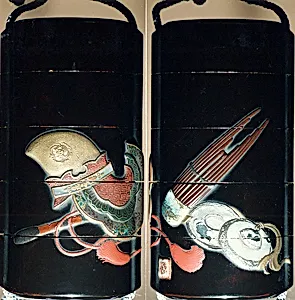
Case (Inrō) with Design of Bugaku Hat (obverseI; Shō Flute and Cymbals (reverse)
Unknown Artist
19th century
Medium
Sprinkled gold lacquer with inlaid mother-of-pearl, pottery, and pewter; Interior: nashiji and fundame; Ojime: marble; Netsuke: wood with lacquer decoration of books
Dimensions
3 3/4 x 1 15/16 x 1 3/16 in. (9.5 x 4.9 x 3 cm)
Classification
Inrō
Culture & Period
Japan · Edo period (1615–1868)
Department
Asian Art
Museum
Metropolitan Museum of Art, New York, NY
Credit
H. O. Havemeyer Collection, Bequest of Mrs. H. O. Havemeyer, 1929
Accession Number
29.100.780
Rights
Public Domain
Tags
About this artwork
This case (inrō) with design of bugaku hat (obversei; shō flute and cymbals (reverse) from Japan, Edo period (1615–1868), dating from 19th century, represents the extraordinary craftsmanship of Japanese lacquerware artisans. The work, executed in sprinkled gold lacquer with inlaid mother-of-pearl, pottery, and pewter; interior: nashiji and fundame; ojime: marble; netsuke: wood with lacquer decoration of books, measures 3 3/4 x 1 15/16 x 1 3/16 in. and dates from a period of significant artistic ...
Art Historical Context
This exquisite *inrō*—a compact, lacquered case from Japan's Edo period (16151868)—exemplifies the pinnacle of 19th-century craftsmanship. Worn suspended from a kimono sash by samurai and merchants alike, inrō served as portable containers for medicines, seals, or tobacco, secured by an *ojime* bead (here, marble) and a carved *netsuke* toggle (wooden, adorned with lacquered books). Measuring just 3 3/4 x 1 15/16 x 1 3/16 inches, its diminutive size belies the intricate artistry required to create it. The obverse features a bugaku hat, a tall, ornate headpiece from Japan's imperial court dance, while the reverse depicts a *shō* mouth organ and cymbals—key instruments in bugaku performances, which blended Chinese, Korean, and indigenous traditions. Crafted by an unknown master, the exterior employs sprinkled gold lacquer (*maki-e*) enhanced with inlaid mother-of-pearl (*raden*), pottery, and pewter for shimmering depth. The interior gleams with *nashiji* (pearl-like gold flecks) and *fundame* (smooth gold base), techniques that highlight the era's obsession with luxurious, multi-layered finishes. Part of the Metropolitan Museum of Art's H.O. Havemeyer Collection, this inrō offers a window into Edo Japan's refined material culture, where everyday objects became canvases for celebrating aristocratic arts like bugaku. Its survival underscores the enduring allure of lacquerware, prized worldwide for its durability and opulence.