
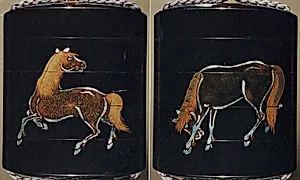
Case (Inrō) with Design of Horses
Unknown Artist
18th–19th century
Medium
Lacquer, roiro, gold togidashi, nashiji, raden inlay; Interior: nashiji and fundame
Dimensions
2 13/16 x 2 5/16 x 13/16 in. (7.2 x 5.8 x 2 cm)
Classification
Inrō
Culture & Period
Japan · Edo period (1615–1868)
Department
Asian Art
Museum
Metropolitan Museum of Art, New York, NY
Credit
Rogers Fund, 1913
Accession Number
13.67.54
Rights
Public Domain
Tags
Art Historical Context
Step into the refined world of Edo-period Japan (1615–1868) with this exquisite *Inrō*, a case designed to hold medicines, seals, or small valuables. Worn suspended from a belt via a netsuke and cord, these portable accessories were a hallmark of samurai and merchant fashion during the 18th–19th centuries, blending practicality with artistry. Measuring just 2 13/16 x 2 5/16 x 13/16 inches, example from the Metropolitan Museum of Art the era's obsession with miniature luxury. Crafted by an unknown master, the *Inrō* showcases advanced lacquer techniques: glossy black *roiro* for a mirror-like shine, burnished gold *togidashi* and pearlescent *nashiji* grounds, plus shimmering *raden* inlays of mother-of-pearl. The interior features subtle *nashiji* and *fundame* gold lacquer, highlighting the meticulous layering process that could take months. Horses gallop across the surface—a motif symbolizing strength, speed, and imperial prestige in Japanese culture. This Rogers Fund acquisition of 1913 offers a window into ukiyo-e-inspired opulence, where everyday objects became canvases for nature's vitality. A testament to Japan's lacquer legacy, it invites you to appreciate the delicate balance of form, function, and folklore.