
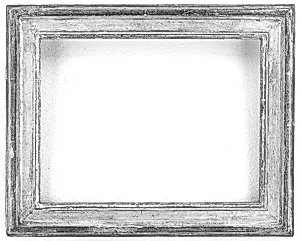
Cassetta frame
Unknown Artist
ca. 1870, style Louis XVI
Medium
Oak
Dimensions
Overall: 11 3/16 × 14 in. (28.4 × 35.5 cm) Sight: 7 7/8 × 10 9/16 in. (20 × 26.9 cm) Rabbet: 8 13/16 × 11 1/2 in. (22.4 × 29.2 cm)
Classification
Frames
Culture
French
Department
Robert Lehman Collection
Museum
Metropolitan Museum of Art, New York, NY
Credit
Robert Lehman Collection, 1975
Accession Number
1975.1.2543
Rights
Public Domain
Art Historical Context
This elegant cassetta frame, crafted in oak around 1870 in the Louis XVI style, exemplifies 19th-century French historicism. The term "cassetta," meaning "little box" in Italian, refers to its deep, recessed profile that creates a sense of depth and intimacy, perfectly framing paintings as if they were precious jewels. Measuring 11 3/16 × 14 inches overall, with a sight opening of 7 7/8 × 10 9/16 inches, it was designed to hold a modestly sized artwork, highlighting the intricate balance between frame and canvas. Louis XVI style, originally from the late 18th century, draws on neoclassical motifs like straight lines, subtle moldings, and restrained ornamentation inspired by ancient Greece and Rome. By the 1870s, amid France's Second Empire and a vogue for revivalism, artisans revived these forms to evoke royal grandeur and sophistication. Oak's durability made it ideal for such architectural frames, ensuring longevity while showcasing fine woodworking techniques like precise rabbeting (inner ledge at 8 13/16 × 11 1/2 inches). Housed in the Metropolitan Museum of Art's Robert Lehman Collection since 1975, this anonymous masterpiece underscores frames as artworks in their own right—essential to how we experience paintings. It invites visitors to appreciate the unsung artistry that elevates visual storytelling.