
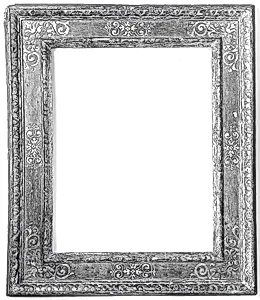
Cassetta frame
Unknown Artist
mid-16th century
Medium
Poplar
Dimensions
Overall: 20 7/8 × 17 3/8 in. (53 × 44.2 cm) Sight: 14 7/16 × 11 1/8 in. (36.7 × 28.2 cm) Rabbet: 15 3/16 × 11 3/4 in. (38.6 × 29.9 cm)
Classification
Frames
Culture
Italian, Veneto
Department
Robert Lehman Collection
Museum
Metropolitan Museum of Art, New York, NY
Credit
Robert Lehman Collection, 1975
Accession Number
1975.1.1634
Rights
Public Domain
Art Historical Context
Step into the elegant world of Renaissance framing with this exquisite *Cassetta frame* from mid-16th-century Veneto, Italy. Crafted from poplar wood—a lightweight, workable choice favored for its fine grain—this frame exemplifies the refined artistry of Venetian workshops during the High Renaissance. The term "cassetta," meaning "little box" in Italian, refers to its characteristic recessed, box-like profile: a flat outer molding framing a raised inner sight edge, designed to cradle and elevate paintings with subtle sophistication. Measuring 20⅞ × 17⅜ inches overall, with a sight opening of 14½ × 11⅛ inches, this frame was precisely engineered (note the rabbet dimensions of 15¼ × 11¾ inches) to secure artworks like portraits or devotional panels. In Veneto's thriving artistic hubs, such as Venice, frames were not mere supports but integral to the viewing experience, often gilded or painted to harmonize with opulent interiors. Though the artist remains unknown, the frame's clean lines and structural integrity highlight the era's mastery of woodworking techniques, blending functionality with aesthetic grace. Today, housed in the Robert Lehman Collection at The Metropolitan Museum of Art (acquired 1975), this survivor offers a glimpse into how Renaissance collectors framed their treasures, underscoring the cultural prestige of Venetian design in European art history.