
Caster
ca. 1735
Medium
Silver
Dimensions
Overall: 6 7/8 x 2 1/2 in. (17.5 x 6.4 cm); 8 oz. (248.2 g) Foot: Diam. 2 5/16 in. (5.9 cm) Body: H. 3 7/8 in. (9.8 cm); 5 oz. 7 dwt. (165.8 g) Cover: H. 3 3/8 in. (8.6 cm); 2 oz. 13 dwt. (82.4 g)
Classification
Caster
Culture
American
Department
The American Wing
Museum
Metropolitan Museum of Art, New York, NY
Credit
Sansbury-Mills Fund, 1972
Accession Number
1972.233.1a, b
Rights
Public Domain
Art Historical Context
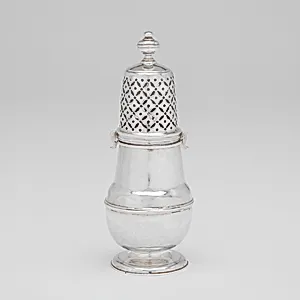
This elegant silver caster, crafted by New Yorkversmith Adrian Bancker around 1735, exemplifies the craftsmanship of colonial American silverwork. Standing at nearly 7 inches tall and weighing about 8 ounces, it features a baluster-shaped body, a flared foot, and a domed cover—hallmarks of Queen Anne style popular in early 18th-century America. Bancker, active in New York City, renowned for producing high-quality domestic silver for the city's merchant elite, blending British influences with local ingenuity. Sugar casters like this one were essential tableware in prosperous households, used to sprinkle powdered sugar over desserts or fruits, symbolizing wealth and hospitality in the Atlantic trade era. The precise construction—evident in the separately weighed foot (2 5/16 inches in diameter), body, and cover—highlights the silversmith's skill in chasing, soldering, and hallmarking, techniques that ensured durability and shine. Housed in The Metropolitan Museum of Art's American Wing and acquired through the Sansbury-Mills Fund in 1972, this caster offers a tangible glimpse into everyday luxury of pre-Revolutionary America, celebrating the artistry of immigrant craftsmen who shaped the nation's decorative arts tradition.