
Cat
ca. 1750
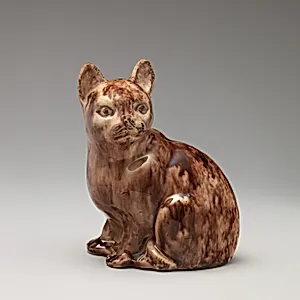
Medium
Lead-glazed earthenware
Dimensions
Height: 5 1/4 in. (13.3 cm)
Classification
Ceramics-Pottery
Culture
British, Staffordshire
Department
European Sculpture and Decorative Arts
Museum
Metropolitan Museum of Art, New York, NY
Credit
Gift of Mrs. Russell S. Carter, 1944
Accession Number
44.39.45
Rights
Public Domain
Tags
Art Historical Context
This charming "Cat" figure, created around 1750 in the Whieldon type, exemplifies the vibrant world of Staffordshire pottery during Britain's Georgian era. Attributed to the style of master potter Thomas Whieldon who pioneered colorful lead-glazed earthenware his Fenton factory, this 5¼-inch-tall sculpture the playful spirit of mid-18th-century decorative arts. Staffordshire potters like Whieldon produced affordable, mass-manufactured figures for middle-class homes, blending whimsy with technical innovation. medium—lead-glazed earthen—is key to its appeal. The lead glaze creates a glossy, mottled finish in tortoiseshell-like hues of brown, yellow, and green, mimicking fur and adding lifelike texture through simple press-molding techniques. These small animal figures, often depicting cats, dogs, or livestock, reflect growing fascination with naturalism and domestic pets in English culture, serving as mantelpiece ornaments that brought joy to everyday life. Today, housed in the Metropolitan Museum of Art's European Sculpture and Decorative Arts Department, this "Cat" highlights Staffordshire's role in democratizing art, making high-style whimsy accessible long before mass production's industrial boom. A purr-fect glimpse into 18th-century craftsmanship!
About the Artist
Whieldon type
Whieldon-type is not a single artist but a catalogue attribution used by museums for unmarked mid-18th-century Staffordshire earthenware in the manner of Thomas Whieldon (1719-1795), the celebrated English potter of Fenton Vivian. Whieldon perfected lead-glazed cream-colored earthenware streaked and dappled with metallic oxides - manganese browns, copper greens, cobalt blues - producing the mottle...