
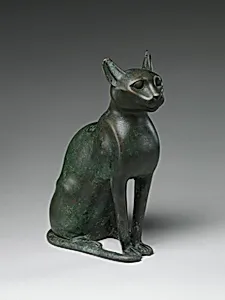
Cat Statuette intended to contain a mummified cat
Unknown Artist
332–30 B.C.
Medium
Leaded bronze
Dimensions
H, 27.4 × W. 11.9 × D. 23.3 cm, 2.5 kg (10 13/16 × 4 11/16 × 9 3/16 in., 5.5 lb.); with tangs: H. 32 cm (12 5/8 in.); with mount: 3.7 kg (8.2 lb.)
Classification
Statuette, cat
Period
Ptolemaic Period
Department
Egyptian Art
Museum
Metropolitan Museum of Art, New York, NY
Credit
Harris Brisbane Dick Fund, 1956
Accession Number
56.16.1
Rights
Public Domain
Tags
Art Historical Context
In Ptolemaic Egypt, statuettes like this one were cast specifically to enclose mummified cats, turning the animal’s preserved body into a votive offering placed in temples. The hollow interior allowed the remains to rest inside the metal shell, creating a permanent link between the creature and the divine realm it represented. The seated bronze figure balances outward alertness with concealed purpose: its upright ears and forward gaze suggest a living animal, yet the thick walls and closed form conceal the cavity that once held decaying matter. Subtle modeling around the shoulders and haunches keeps the surface taut, so the eye registers both the cat’s physical weight and the unseen contents it protected. Made of leaded bronze between 332 and 30 B.C., the piece belongs to the Metropolitan Museum of Art. Look closely at the narrow incised band around the neck, where a faint pattern of lines once indicated a collar and now marks the precise point where the vessel’s sacred function meets its outward animal shape.