
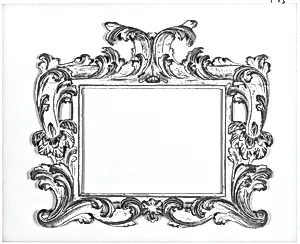
Cauliculi frame
Unknown Artist
style early 18th century, made 19th century
Medium
Poplar
Dimensions
Overall: 19 3/16 × 22 1/8 in. (48.7 × 56.2 cm) Sight: 9 5/8 × 12 7/8 in. (24.4 × 32.7 cm) Rabbet: 10 7/16 × 13 3/4 in. (26.5 × 35 cm)
Classification
Frames
Culture
Italian, Bologna
Department
Robert Lehman Collection
Museum
Metropolitan Museum of Art, New York, NY
Credit
Robert Lehman Collection, 1975
Accession Number
1975.1.2171
Rights
Public Domain
Art Historical Context
Nestled in the Robert Lehman Collection at the Metropolitan Museum of Art, this exquisite *Cauliculi frame* hails from Bologna, Italy—a city renowned for its masterful woodworking traditions. Crafted in poplar wood during the 19th century it emulates the ornate style of early 18th-century Baroque frames. Measuring 19 3/16 × 22 1/8 inches overall, its delicate proportions frame a sight area of 9 5/8 × 12 7/8 inches, the frame's role as both protector and artistic complement to paintings. The term "cauliculi" refers to stylized acanthus leaf stalks, a classical motif revived here with intricate carving that evokes the exuberant decoration of Bologna's Baroque era. Poplar, a lightweight yet sturdy hardwood native to Italy, allowed artisans to achieve fine, flowing details through skilled gilding and relief work—techniques that made Bolognese frames highly prized across Europe. This 19th-century recreation reflects a nostalgic revival of 18th-century opulence, often used to authentically house period artworks. As a standalone treasure in the Met's holdings (acquired in 1975), it underscores frames' evolution from mere supports to sculptural masterpieces, embodying Bologna's cultural legacy in decorative arts. Visitors will appreciate its tactile elegance, a window into Italy's enduring craftsmanship.