
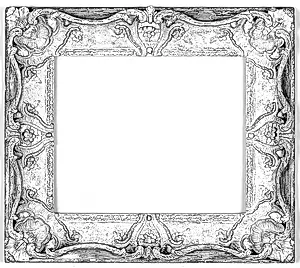
Swept frame
Unknown Artist
1750–60
Medium
Oak lower moldings and feather keys; lime upper moldings.
Dimensions
Overall: 24 3/16 × 27 3/16 in. (61.5 × 69 cm) Sight: 14 3/4 × 17 15/16 in. (37.5 × 45.5 cm) Rabbet: 19 1/8 × 15 3/4 in. (48.5 × 40 cm)
Classification
Frames
Culture
French
Department
Robert Lehman Collection
Museum
Metropolitan Museum of Art, New York, NY
Credit
Robert Lehman Collection, 1975
Accession Number
1975.1.2271
Rights
Public Domain
Art Historical Context
Step into the elegant world of 18th-century French decorative arts with this exquisite *Swept frame* from 1750–60. Crafted during the lavish Louis XV era, this frame exemplifies the dynamic Rococo style, characterized by its sweeping, S-shaped curves and fluid lines that evoke movement and whimsy. Originally designed to encase a painting, its overall dimensions of 24 3/16 × 27 3/16 inches make it a perfect scale for intimate salon displays, where such frames enhanced the viewer's experience by harmonizing with the artwork inside. The frame's construction highlights masterful woodworking techniques: sturdy oak forms the lower moldings and feather keys—small wooden wedges that secure joints for durability—while lighter lime wood shapes the intricate upper moldings, ideal for fine carving. The "sight" opening (14 3/4 × 17 15/16 inches) and rabbet dimensions reveal precise engineering to fit paintings snugly. These choices reflect French frame makers' expertise in balancing strength, ornamentation, and functionality. Housed in the Metropolitan Museum of Art's Robert Lehman Collection since 1975, this anonymous masterpiece underscores the era's cultural emphasis on opulent interiors. Frames like this were not mere supports but artistic statements, elevating paintings in aristocratic homes and salons. A testament to forgotten craftsmanship, it invites us to appreciate the unsung beauty framing our visual treasures.