
Cebren (The River God)
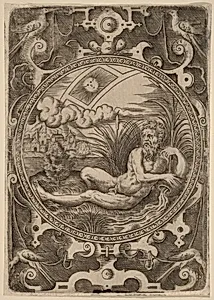
Medium
engraving on laid paper
Dimensions
sheet: 10.6 × 7.5 cm (4 3/16 × 2 15/16 in.)
Classification
Department
CG-E
Museum
National Gallery of Art, Washington, D.C.
Credit
Anonymous gift in memory of Charles B. Hoyt
Accession Number
1950.2.5
Rights
Public Domain
Art Historical Context
Behold *Cebren (The River)*, a delicate engraving from the early 16th century by an anonymous Netherlandish artist (once attributed to Abraham de Bru). Created between 1501 and 1550, this intimate print captures the mythological figure of Cebren, a deity from classical lore, embodying the Renaissance fascination with ancient gods and nature's spirits. At just 10.6 × 7.5 cm, its diminutive scale invites close viewing, revealing fine details etched with precision on laid paper—a period staple marked by subtle chain lines from the papermaking mold. Engraving, a hallmark of Northern Renaissance printmaking, allowed artists like this Netherlandish master to incise intricate lines into a metal plate, producing crisp, reproducible images. This technique democratized art, enabling collectors, scholars, and book illustrators across Europe to own classical-inspired works without the expense of paintings. Netherlandish engravers excelled in such vivid, narrative scenes, blending Gothic detail with emerging Renaissance humanism. Today, this gem resides in the National Gallery of Art's print collection (Department CG-E), thanks to an anonymous gift honoring Charles B. Hoyt. It whispers of a time when mythology flowed through art, bridging antiquity and the modern age—perfect for pondering rivers' timeless power.