
Ceiling decoration
1746–1809
Medium
interiors
Classification
interiors
Department
Smithsonian Collection
Museum
Smithsonian American Art Museum
Credit
Museum purchase through gift of various donors and from Eleanor G. Hewitt Fund
Accession Number
1938-88-1728
Rights
Public Domain
About this artwork
Research in Progress
Art Historical Context
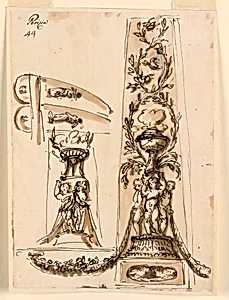
Giuseppe Barberi (1746–1809), a prominent Italian architect and designer, created this *Ceiling Decoration* during the late 18th century, a period when opulent interiors blended Rococo elegance with emerging Neoclassical restraint. As part of the Smithsonian American Art Museum's collection of interiors, this work exemplifies Barberi's expertise in architectural ornamentation, likely intended for grand palaces or villas in Italy. Acquired through museum purchase with gifts from various donors and the Eleanor G. Hewitt Fund, it highlights the cross-cultural appeal of European design in American collections. Though research on this piece is ongoing, its classification as an interior element underscores the era's fascination with illusionistic ceilings—painted or sculpted designs that drew the eye upward, creating a sense of boundless space and grandeur. Barberi's style often featured intricate motifs like garlands, urns, and mythological figures, reflecting Enlightenment ideals of harmony and classical revival. For visitors, it offers a glimpse into how everyday spaces were transformed into theatrical spectacles. Displayed in the Smithsonian Collection, this ceiling decoration invites us to ponder the artistry behind hidden architectural details, bridging Italian mastery with global museum storytelling. (198 words)