
Ceiling Design
early 18th century
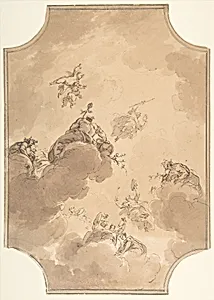
Medium
Pen and brown ink, brush and brown wash, over traces of red chalk; two double framing lines in pen and black ink
Dimensions
sheet: 11 7/8 x 8 1/2 in. (30.2 x 21.6 cm)
Classification
Drawings
Department
Drawings and Prints
Museum
Metropolitan Museum of Art, New York, NY
Credit
Gift of Mrs. Richard Krautheimer, 1969
Accession Number
69.296
Rights
Public Domain
Tags
Art Historical Context
Jacob de Wit’s *iling Design* captures the lively spirit of early eighteenth-century European decoration. A leading Dutch artist celebrated for his illusionistic ceiling paintings, de Wit specialized in lively arrangements of putti—playful winged cherubs—that seem to float above the viewer. This preparatory sheet would have guided the creation of a grand interior scheme, where such figures often symbolized joy, abundance, or divine presence in palaces, town halls, and churches. Executed in pen and brown ink with fluid brush washes over faint red-chalk underdrawing, the work reveals de Wit’s confident hand and keen understanding of light and volume. The double framing lines suggest he considered the composition as a finished presentation piece, perhaps for a patron. Measuring just under a foot in height, the drawing’s compact scale belies the expansive effect it was meant to produce when translated to a vast plaster ceiling. Today in the Metropolitan Museum’s collection, the sheet offers visitors an intimate glimpse into the planning behind the period’s most theatrical architectural decoration. Through such designs, artists like de Wit transformed ordinary rooms into heavenly realms, blending technical skill with a sense of buoyant delight that continues to charm audiences.
About the Artist
Jacob de Wit · 1695–1754
Comment on works: Religious; Allegory; Bas-relief